
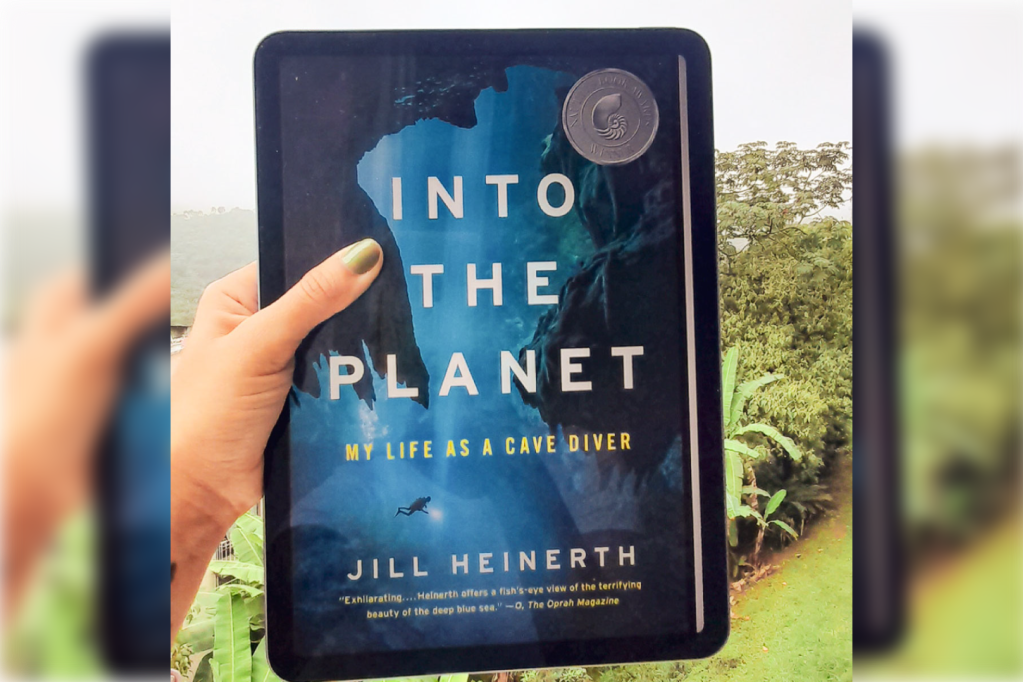
Con el propósito de prepararme mentalmente para bucear en un cenote, descubrí este libro escrito por Jill Heinerth, una buceadora de cuevas, exploradora submarina, escritora, fotógrafa y cineasta canadiense para National Geographic. Probablemente, ella ha tenido más aventuras que tú y yo juntos, y leer la historia de esta mujer fue la inspiración que necesitaba para hacer de mi vida una aventura.
Logré identificarme con varias de sus experiencias. Por ejemplo, ella también es diseñadora gráfica y había creado su propia agencia creativa. Aunque le iba muy bien, se sentía vacía y abrumada por su trabajo. Encontró en el buceo una forma de escapar de la rutina.
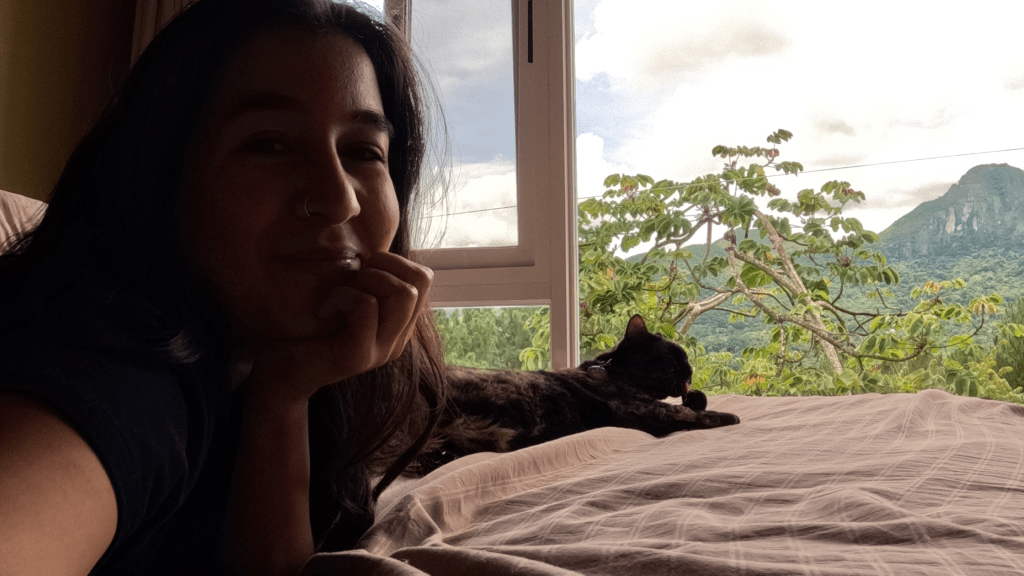
A mí me pasó algo similar; no sé si fue la crisis de los 30, pero empecé a cuestionar mi vida. Había alcanzado lo que socialmente se considera éxito: vivía sola con mi gata, trabajaba de manera remota como diseñadora, sin mayores responsabilidades ni obligaciones. Sin embargo, mi tranquila y ordinaria rutina comenzó a incomodarme. Me preguntaba: ¿Y ahora qué? ¿Qué sigue para mí? Con la intención de explorar nuevas habilidades y salir de mi zona de confort, empecé un curso de buceo. Jamás imaginé que un año después estaría considerando bucear en un cenote.
Esta mujer extraordinaria narra sus experiencias buceando en el sistema de cuevas submarinas más largo del mundo en Ejido Jacinto Pat y en las profundidades del sistema Dos Ojos en la Riviera Maya, México. También relata su experiencia con la enfermedad de descompresión, que la llevó a una cámara hiperbárica en Playa del Carmen. Además, dedica un capítulo al buceo en cuevas de hielo en la Antártida y cómo su vida estuvo en riesgo debido a las condiciones climáticas.
Jill rompió el récord de bucear en la cueva más profunda que cualquier otra mujer en la historia. Es importante destacar que en su época había muy pocas mujeres instructoras de buceo en cuevas, ya que esta actividad ha sido tradicionalmente dominada por hombres. Su enfrentamiento con el sexismo se convirtió en parte de su misión de vida. Eligió esforzarse por ser una exploradora reconocida e inspirar a otras mujeres a seguir sus sueños como buceadoras. Jill ha recibido numerosos premios, incluyendo su inclusión en el Salón de la Fama de las Mujeres Buceadoras y en el Salón de la Fama Internacional del Buceo.
El buceo en cuevas es una de las actividades más arriesgadas, y ella cuenta las veces que perdió a amigos y colegas buceando, así como las ocasiones en que tuvo que recuperar sus cuerpos.
Algo interesante que aprendí es que muchos buceadores mueren ahogados porque no abren su tanque de aire. Esto puede suceder por una distracción al momento de chequear el regulador y la entrada de aire sin verificar el manómetro. Ahora entiendo por qué un instructor me hacía tanto énfasis en esto; es un error que parece simple, casi obvio, pero ha causado la muerte de muchos buceadores.
A modo de chisme, Jill también comparte sobre su relación con su esposo. Se conocieron buceando y él fue un mentor para ella. Con el tiempo, comenzaron una relación y se casaron, en parte porque ella necesitaba la visa para quedarse en Estados Unidos. Siempre se cuestionó si su relación era por amor genuino o un acuerdo conveniente con su compañero de buceo. Además, tuvo que luchar mucho para ser reconocida como buceadora y no solo como la esposa de un buceador.
Si te gustan las historias de aventuras, el buceo o cualquier actividad acuática, o simplemente quieres aprender más sobre el buceo, este libro es para ti.
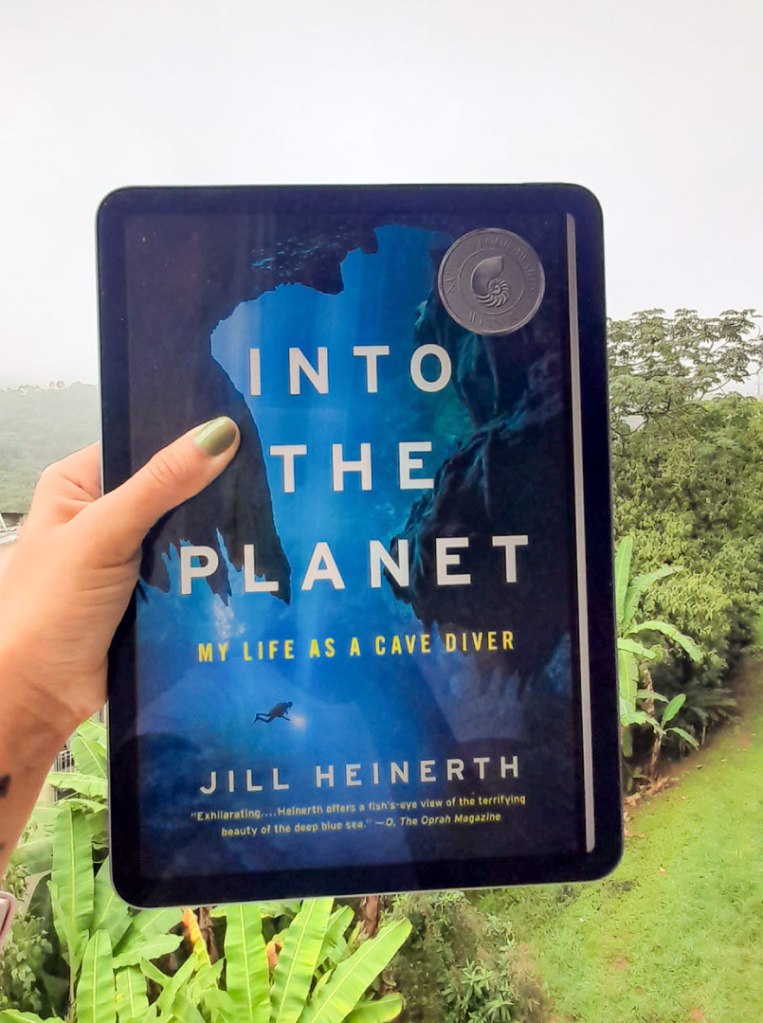
To mentally prepare myself for diving in a cenote, I discovered a book written by Jill Heinerth, a Canadian cave diver, underwater explorer, writer, photographer, and filmmaker for National Geographic. She has probably had more adventures than both you and I combined, and reading this woman’s story was the inspiration I needed to turn my life into an adventure.
I found myself identifying with many of her experiences. For example, she is also a graphic designer and had created her own creative agency. Despite her success, she felt empty and overwhelmed by her work. She found an escape from the routine through diving.
Something similar happened to me. Maybe it was the so-called 30s crisis, but I began to question my life. I had reached what is socially accepted and labeled as success: living alone with my cat, working remotely as a designer, with no major responsibilities or obligations. However, my peaceful and ordinary routine started to bother me. I wondered: What now? What’s next for me? With the intention of exploring new skills and stepping out of my comfort zone, I started a diving course. I never imagined that a year later, I would be considering diving in a cenote.
This extraordinary woman recounts her experiences diving in the longest underwater cave system in the world at Ejido Jacinto Pat and the deepest at the Dos Ojos system in the Riviera Maya, Mexico. She also shares her experience with decompression sickness, which required her to stay in a hyperbaric chamber in Playa del Carmen. Additionally, she dedicates a chapter to ice cave diving in Antarctica and how her life was at risk due to the harsh conditions.
Jill broke the record for diving in the deepest cave of any woman in history. It’s important to highlight that during her time, there were very few female cave diving instructors, as this activity has been predominantly male-dominated. Her encounters with sexism became part of her life mission. She chose to strive to be a recognized explorer and inspire other women to follow their dreams as divers. Jill has received numerous awards, including her inclusion in the Women Divers Hall of Fame and the International Scuba Diving Hall of Fame.
Cave diving is one of the most hazardous activities, and she recounts the times she lost friends and colleagues while diving, as well as the times she had to recover their bodies.
One interesting fact I learned is that many divers drown because they forget to open their air tank. This can happen due to distraction when checking the regulator and air intake without looking at the pressure gauge. Now I understand why an instructor emphasized this so much; it’s a mistake that seems simple, almost obvious, but has caused the death of many divers.
On a personal note, Jill also shares about her relationship with her husband. They met while diving, and he became a mentor for her. Over time, they started a relationship and got married, partly because she needed a visa to stay in the United States. She always struggled with the duality of whether their relationship was genuine love or a convenient arrangement with her diving partner. Moreover, she had to fight hard to be recognized as a diver and not just as the wife of a diver.
If you enjoy adventure stories, diving or any water-related activities, or simply want to learn more about diving, this book is for you.


 Karolina Díez
Deja un comentario